Introduction
Choosing the right fish finder can completely change the way you fish. Whether you are fishing freshwater lakes, rivers, reservoirs, coastal water, or offshore structure, a quality fish finder helps you understand what is happening below and around your boat. It can show depth, bottom structure, bait, fish, vegetation, drop-offs, brush piles, ledges, and underwater changes that are almost impossible to see from the surface.
But with so many models available from Garmin, Humminbird, and Lowrance, many boat owners feel confused. Should you buy a basic fish finder or a GPS chartplotter combo? Do you need CHIRP sonar, side imaging, down imaging, live sonar, touchscreen control, or advanced maps? And which brand is best for your fishing style?
The answer depends on your boat, budget, fishing environment, and the features you actually need. This guide will help you understand the most important fish finder features and compare Garmin, Humminbird, and Lowrance so you can choose the right unit with confidence.
What Is a Fish Finder?
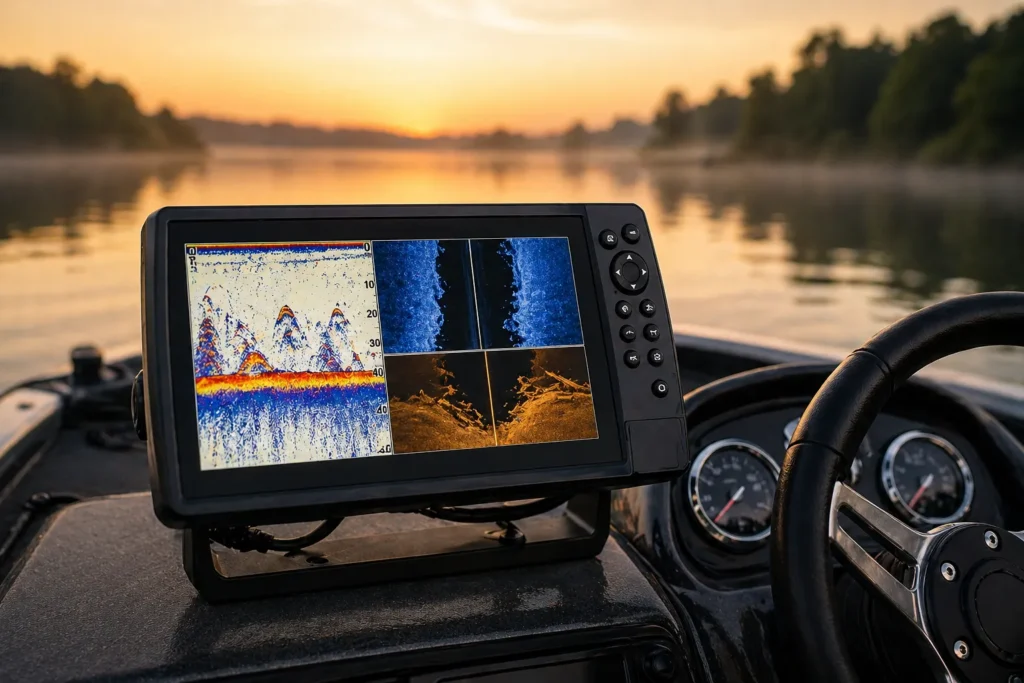
A fish finder is a marine electronic device that uses sonar to help anglers see what is under or around the boat. It works with a transducer, which sends sonar signals into the water and receives the returning echoes. The fish finder then turns that information into images on the display screen.
Modern fish finders are much more advanced than older depth finders. Many units now include GPS, mapping, side imaging, down imaging, live sonar compatibility, networking, waypoint marking, and chartplotter functions. Some units can also connect with trolling motors, shallow water anchors, radar, and other marine electronics.
For serious anglers, a fish finder is not just a screen. It is a complete fishing tool that helps with navigation, location, boat control, and fish targeting.
Step 1: Decide How You Fish
Before choosing a brand or model, think about how you actually fish. A weekend angler in a small jon boat does not need the same system as a tournament bass fisherman with multiple screens and live sonar.
If you fish small lakes or ponds, a simple fish finder with CHIRP sonar and GPS may be enough. If you fish larger lakes, deep reservoirs, or offshore areas, you may want a chartplotter with detailed mapping and side imaging. If you fish around brush piles, docks, grass lines, ledges, or submerged timber, side imaging and down imaging can be extremely useful.
If you are a serious bass, crappie, walleye, or tournament angler, you may want live sonar compatibility. Live sonar allows you to see fish and structure in real time, which can help you make faster decisions on the water.
The best fish finder is not always the most expensive one. The best fish finder is the one that matches your fishing style.
Step 2: Understand Sonar Types
One of the most important parts of choosing a fish finder is understanding sonar.
Traditional CHIRP Sonar
Traditional CHIRP sonar is great for showing fish arches, depth, and bottom hardness. It is useful for general fishing and works well when you are moving over water. CHIRP sends a range of frequencies instead of one single frequency, which can create better target separation and clearer returns.
For most anglers, CHIRP sonar is the basic feature you should look for in a modern fish finder.
Down Imaging
Down imaging gives a more detailed image of what is directly below the boat. It is useful for identifying structure, brush, rocks, trees, vegetation, and bottom changes. Different brands use different names for this technology. Garmin uses ClearVü, Humminbird uses Down Imaging, and Lowrance uses DownScan or Active Imaging depending on the unit.
Garmin explains that ClearVü and SideVü use a thin, wide sonar beam to create clearer images of structure and fish below or beside the boat, different from traditional cone-shaped sonar.
Side Imaging
Side imaging scans out to the left and right side of the boat. This is one of the most valuable features for finding structure quickly. Instead of driving directly over fish or cover, you can scan a wide area and mark waypoints when you see something interesting.
If you fish big flats, points, creek channels, brush piles, docks, or offshore structure, side imaging can save a lot of time.
Live Sonar
Live sonar shows fish and structure in real time. This technology is popular with advanced anglers because it helps them see how fish react to bait. Garmin has LiveScope, Humminbird has MEGA Live, and Lowrance has ActiveTarget.
Lowrance describes ActiveTarget 2 as live sonar that gives underwater views of fish and structure ahead, below, or to the sides of the boat.
Live sonar is powerful, but it is also more expensive and may require extra modules, transducers, mounts, and installation work.
Step 3: Choose the Right Screen Size
Screen size matters more than many buyers realize. A small screen can work for basic depth and fish arches, but if you want side imaging, split-screen views, maps, or live sonar, a larger screen is much easier to use.
A 4-inch or 5-inch display can work well for kayaks, small boats, and basic fishing. A 7-inch screen is a good middle option for many anglers. A 9-inch or larger screen is better if you want mapping, side imaging, and split-screen views. Tournament anglers often use multiple large displays at the console and bow.
If your budget allows, buy the biggest screen that fits your boat and setup. Better visibility can make a major difference on sunny days, rough water, or when using multiple sonar views at the same time.
Step 4: Check Mapping and GPS Features
A fish finder with GPS and mapping can help you mark productive spots, create routes, follow depth contours, and navigate safely. This is especially important on large lakes, unfamiliar water, or coastal areas.
Some units come with basic maps, while others support premium mapping cards or built-in mapping. Garmin units may offer Garmin Navionics+ map options on compatible chartplotters. For example, Garmin’s ECHOMAP UHD2 series includes sonar options such as Traditional CHIRP, ClearVü, and SideVü on select models, along with map options depending on the package.
If you fish the same lake often, good mapping can help you locate ledges, humps, channels, points, and drop-offs. If you fish new water, mapping can help you break down the lake faster.
Garmin Fish Finders: Best For Easy Use and Strong Mapping
Garmin is popular with anglers who want clean displays, user-friendly menus, strong mapping options, and advanced sonar technology. Garmin fish finders and chartplotters are often known for being easy to learn, especially for anglers who do not want a complicated setup.
Garmin’s ClearVü and SideVü scanning sonar can provide detailed views below and to the side of the boat. Garmin also offers LiveScope on compatible systems, which is one of the most popular live sonar technologies in the fishing market.
Garmin can be a good choice if you want:
- Easy-to-use menus
- Strong GPS and mapping options
- Good screen clarity
- ClearVü and SideVü scanning sonar
- LiveScope compatibility on advanced setups
- A clean system for freshwater or coastal fishing
Garmin is often a strong option for anglers who want a balanced setup that is powerful but not too difficult to understand.
Humminbird Fish Finders: Best For Imaging and Minn Kota Integration
Humminbird is especially popular among bass, crappie, and freshwater anglers who care about imaging detail. Humminbird’s MEGA Imaging technology is one of its biggest selling points.
Humminbird says MEGA Imaging uses the megahertz range to deliver more detail and help anglers distinguish fish from structure, see the direction fish are facing, and identify targets more clearly.
Humminbird also works well for anglers who use Minn Kota trolling motors. Their One-Boat Network ecosystem is designed to connect Humminbird fish finders, Minn Kota trolling motors, and other compatible equipment. Humminbird describes this network as a way to connect your trolling motor, fish finder, and shallow water anchor for a more integrated fishing setup.
Humminbird can be a good choice if you want:
- Excellent side and down imaging detail
- MEGA Imaging
- Strong freshwater fishing features
- Minn Kota trolling motor integration
- LakeMaster and CoastMaster mapping options
- A system built for serious structure fishing
Humminbird is a strong choice for anglers who want detailed imaging and already use or plan to use Minn Kota equipment.
Lowrance Fish Finders: Best For Serious Anglers and Flexible Sonar Systems
Lowrance has a long history in marine electronics and is popular with serious anglers who want flexible sonar, mapping, and networking options. Lowrance units are often used by bass anglers, offshore anglers, and boat owners who want advanced fish-finding tools.
Lowrance Elite FS units provide access to ActiveTarget 2 Live Sonar, Active Imaging, NMEA 2000, and chart options, depending on setup and accessories.
Lowrance is also known for HDS series units, Active Imaging, and ActiveTarget live sonar. This makes Lowrance a strong option for anglers who want a more advanced system and may plan to upgrade over time.
Lowrance can be a good choice if you want:
- Advanced sonar options
- ActiveTarget live sonar compatibility
- Strong chartplotter features
- NMEA 2000 networking
- Flexible system expansion
- A serious fishing electronics setup
Lowrance is a good fit for anglers who want performance, customization, and upgrade potential.
Garmin vs Humminbird vs Lowrance: Which One Should You Choose?
Choose Garmin if you want an easy-to-use fish finder with strong mapping, clean menus, and excellent sonar options. Garmin is great for anglers who want a powerful system without a steep learning curve.
Choose Humminbird if you want excellent imaging detail and strong integration with Minn Kota trolling motors. Humminbird is a smart choice for anglers who focus on freshwater structure fishing and want MEGA Imaging.
Choose Lowrance if you want a flexible, advanced system with strong sonar, mapping, networking, and live sonar upgrade options. Lowrance is ideal for serious anglers who want a performance-focused electronics setup.
There is no single “best” brand for everyone. The right choice depends on how you fish, what boat you own, and which features matter most to you.
Buying Tips Before You Purchase
Before buying a fish finder, always check display size, transducer compatibility, sonar type, mapping options, included accessories, mounting hardware, and power requirements.
Transducer compatibility is especially important. Garmin’s transducer guidance explains that buyers should match the transducer to the device’s sonar and the type of sonar technology they want to use.
Also check whether the unit includes a transducer or is sold as head-unit only. Some listings may look cheaper because they do not include the transducer, mounting hardware, or mapping card.
If you are buying used or refurbished, confirm that the screen works properly, buttons or touchscreen respond correctly, ports are clean, cables are included, and the transducer is not cracked or damaged.
Final Recommendation
The best fish finder is the one that helps you fish smarter and fits your boat correctly. A basic unit may be enough for casual fishing, but serious anglers should consider side imaging, mapping, and live sonar compatibility.
For most boat owners, a 7-inch or 9-inch GPS fish finder with CHIRP, down imaging, side imaging, and good mapping is a strong choice. If you fish frequently or compete in tournaments, investing in a larger screen and live sonar compatibility may be worth it.
Garmin is a great choice for easy operation and mapping. Humminbird is excellent for imaging detail and Minn Kota integration. Lowrance is strong for advanced sonar, networking, and serious fishing setups.
At Marine Reuse, the goal is to help anglers find quality marine electronics at better value. Whether you are upgrading your boat, replacing an older unit, or building a complete fishing setup, choosing the right fish finder can help you save time, find better water, and catch more fish.
Call to Action
Looking for a Garmin, Humminbird, or Lowrance fish finder for your boat?
Browse Marine Reuse’s selection of marine electronics and find the right fish finder for your fishing style, boat size, and budget.
Shop Fish Finders Today