Introduction
A trolling motor is one of the most important upgrades for any serious angler. Whether you fish freshwater lakes, shallow bays, rivers, or coastal flats, the right trolling motor gives you better boat control, quieter movement, and more accurate positioning around structure, docks, weed lines, and offshore fishing spots.
But in 2026, many boat owners are asking the same question: should I buy a used trolling motor or a refurbished trolling motor?
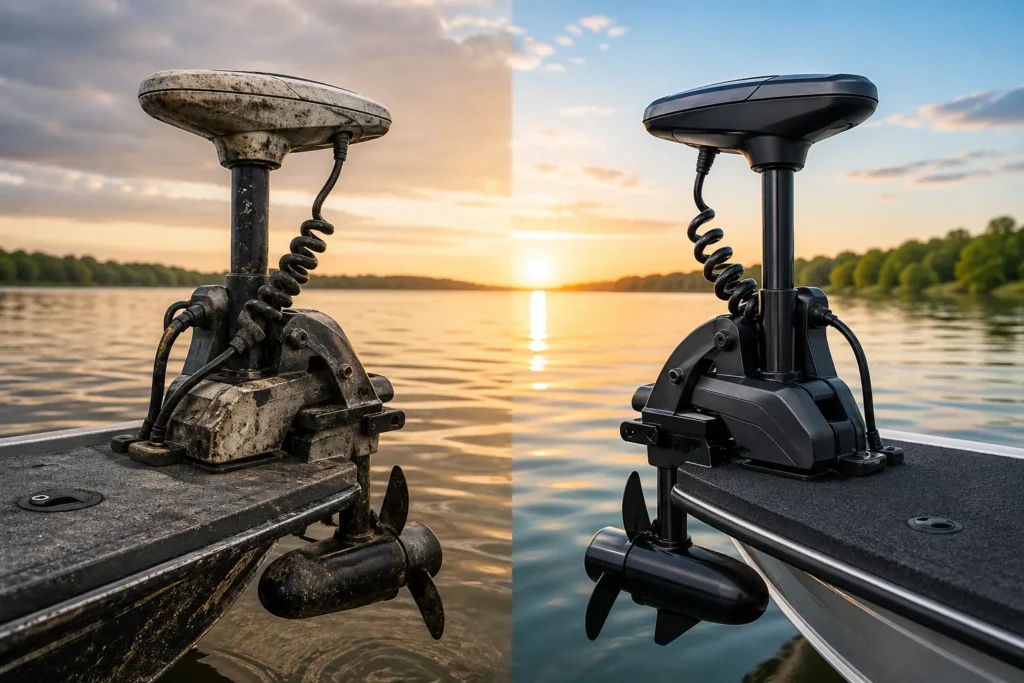
Both options can save money compared to buying brand new. Both can work well when purchased from the right seller. But they are not the same. A used trolling motor may be cheaper upfront, while a refurbished trolling motor usually gives you more confidence because it has been inspected, repaired, tested, or reconditioned before resale.
In this guide, we’ll break down the difference between used and refurbished trolling motors, compare the pros and cons, explain what to check before buying, and help you decide which option is best for your boat in 2026.
What Is a Used Trolling Motor?
A used trolling motor is a motor that has already been owned and operated by another person. It may come from a private seller, trade-in, boat upgrade, fishing shop, online marketplace, or marine resale store.
Used trolling motors are often sold “as-is,” which means the buyer is responsible for checking the condition before purchase. Some used motors are in excellent shape, especially if the previous owner maintained them properly. Others may have hidden wear, wiring problems, damaged shafts, weak seals, battery issues, or worn-out steering components.
The biggest advantage of buying used is the lower price. If you are working with a tight budget, a used trolling motor can be a smart way to get better boat control without paying full retail.
However, the main risk is uncertainty. Unless the motor has been tested and inspected, you may not know its real condition until after installation.
What Is a Refurbished Trolling Motor?
A refurbished trolling motor is different from a basic used motor. Refurbished usually means the motor has been inspected, repaired if needed, cleaned, tested, and prepared for resale. In some cases, refurbished motors may be factory reconditioned by the manufacturer or serviced by a qualified marine electronics technician.
For example, Minn Kota states that its factory reconditioned trolling motors include a limited one-year warranty for the original retail purchaser, covering defects in materials and workmanship within one year after reconditioning.
That type of warranty support can make a major difference for buyers who want savings but still need confidence.
A refurbished trolling motor may cost more than a random used unit, but it usually offers better value because it reduces the risk of buying a motor with hidden issues.
Used vs Refurbished Trolling Motors: Quick Comparison
| Feature | Used Trolling Motor | Refurbished Trolling Motor |
|---|---|---|
| Price | Usually cheaper | Usually higher than used, lower than new |
| Condition | Depends on previous owner | Inspected and tested before resale |
| Warranty | Often no warranty | May include seller or manufacturer warranty |
| Risk Level | Higher | Lower |
| Best For | Budget buyers, DIY repair buyers | Buyers who want savings plus confidence |
| Installation Confidence | Depends on testing | Usually better |
| Long-Term Value | Can be good, but uncertain | Often stronger overall value |
Pros of Buying a Used Trolling Motor
The biggest benefit of buying a used trolling motor is price. You can often find used models for significantly less than a new motor, especially if the seller recently upgraded their boat or is selling older equipment.
Used motors can also be a good option if you know exactly what you are looking for. Experienced boat owners who understand wiring, thrust, shaft length, mounting brackets, and battery systems may be able to inspect a used motor and identify whether it is worth buying.
Used trolling motors are also useful for smaller boats, backup setups, budget builds, jon boats, kayaks, and casual weekend fishing.
If the motor has been lightly used, properly stored, and honestly represented, buying used can be a great deal.
Cons of Buying a Used Trolling Motor
The downside is risk. A used trolling motor may look clean on the outside but still have internal problems.
Common issues include worn cables, damaged control boards, cracked propellers, weak seals, water intrusion, bent shafts, faulty foot pedals, remote pairing problems, GPS anchor issues, and battery connection problems.
Another concern is warranty. Many private used sales do not include any warranty or return option. If the motor stops working after installation, the repair cost becomes your responsibility.
Used motors can also be difficult to verify. Without a serial number, test video, real photos, or inspection report, the buyer has to trust the seller’s word.
For high-end models like Minn Kota Ultrex, Ulterra, Terrova, Garmin Force, Lowrance Ghost, or MotorGuide Tour Pro, repair costs can be expensive. That is why condition matters so much.
Pros of Buying a Refurbished Trolling Motor
A refurbished trolling motor gives buyers a better balance between price and reliability.
The biggest advantage is that the motor has usually been checked before resale. Depending on the seller or manufacturer, this may include testing the motor head, shaft, prop, mount, steering, remote, GPS features, wiring, and battery compatibility.
Refurbished motors are also more likely to include some type of warranty. That warranty may come from the manufacturer, dealer, or refurbishing seller. Warranty terms vary, so buyers should always read the policy before purchasing.
Another advantage is confidence. When a refurbished motor is properly inspected and clearly described, the buyer knows what they are getting. This is especially important for expensive trolling motors with advanced features like i-Pilot, Spot-Lock, Mega Imaging, built-in sonar, brushless motors, or wireless control.
For many boat owners, refurbished is the sweet spot: lower cost than new, but safer than buying random used equipment.
Cons of Buying a Refurbished Trolling Motor
Refurbished trolling motors are usually more expensive than basic used motors. If your only goal is the lowest possible price, refurbished may not be the cheapest option.
Availability can also be limited. Specific shaft lengths, voltage options, sonar versions, and GPS models may sell quickly. If you need a very specific model, you may have to check inventory often.
Another point to watch is the meaning of “refurbished.” Not every seller uses the word the same way. Some motors are factory reconditioned. Others are seller-tested. Some may only be cleaned and listed again. Always check what the seller means by refurbished.
A trustworthy refurbished listing should explain the condition, testing process, included accessories, warranty, return policy, and whether the motor is factory reconditioned or seller refurbished.
Which Option Is Best in 2026?
For most boat owners in 2026, a refurbished trolling motor is the better overall choice because it offers a stronger balance of savings, testing, and buyer confidence.
A used trolling motor can be a good deal if you are buying from a trusted seller, inspecting it in person, or paying a very low price. But if you are buying online, especially for a high-value motor, refurbished is usually safer.
Choose used if:
- You have a tight budget.
- You can inspect or test the motor before buying.
- You understand trolling motor parts and repairs.
- You are buying a simple model for light use.
- The price is low enough to justify the risk.
Choose refurbished if:
- You want better reliability.
- You are buying an expensive motor.
- You need warranty protection.
- You want a tested product.
- You fish often and depend on your trolling motor.
- You are buying online and want lower risk.
For serious anglers, tournament fishermen, guides, and boat owners who rely on GPS anchoring or precise boat control, refurbished is usually the smarter investment.
How to Choose the Right Trolling Motor for Your Boat
Before buying either used or refurbished, make sure the motor fits your boat.
1. Check thrust
Thrust is the power rating of the trolling motor. Larger and heavier boats need more thrust. Minn Kota’s buying guidance explains that voltage relates to battery needs: 55 lbs of thrust or less usually uses 12 volts and one battery, 68–80 lbs uses 24 volts and two batteries, and 101–112 lbs uses 36 volts and three batteries.
Choosing too little thrust can make the motor struggle in wind, current, or rough water.
2. Check shaft length
Shaft length is also critical. If the shaft is too short, the prop may not stay properly submerged. Minn Kota recommends adding extra length for rough water and also notes that bow-mount hand-control motors may require additional shaft length depending on use.
A wrong shaft length can cause poor performance, cavitation, noise, and frustrating boat control.
3. Check voltage and batteries
Make sure your boat has the correct battery setup. A 12V motor, 24V motor, and 36V motor require different wiring and battery capacity. If you upgrade to a more powerful motor, you may also need to upgrade your battery system and charger.
4. Check mounting compatibility
Not every trolling motor mount fits every boat. Check the mounting plate, deck space, quick-release bracket, and whether the motor is bow-mount, transom-mount, cable-steer, electric-steer, or wireless.
5. Check included accessories
A good listing should clearly state what is included. Look for the remote, foot pedal, prop, mounting hardware, heading sensor, power cable, quick-release bracket, and any sonar adapter cables.
What to Check Before Buying a Used or Refurbished Trolling Motor
Before you buy, ask for clear product details.
A professional listing should include real photos, model number, serial number information, shaft length, thrust rating, voltage, condition notes, warranty terms, return policy, and what accessories are included.
If possible, ask whether the motor has been tested under load. A motor that powers on is not always the same as a motor that performs properly on the water.
Also check for signs of damage. Look at the shaft, lower unit, prop, steering cables, mount, control head, wiring, plugs, and foot pedal. For GPS trolling motors, confirm that features like Spot-Lock, remote pairing, and steering response work correctly.
For online purchases, buy from a seller that offers secure checkout, clear shipping terms, and responsive customer support.
Final Recommendation
If you are buying a trolling motor in 2026, the best option depends on your budget, experience level, and risk tolerance.
A used trolling motor is best for buyers who want the lowest price and are comfortable inspecting or repairing equipment. It can be a great deal, but it requires caution.
A refurbished trolling motor is best for buyers who want savings without taking unnecessary risk. It usually gives you better confidence, cleaner product information, and stronger long-term value.
For most boat owners, especially those buying online, refurbished is the better choice.
At Marine Reuse, the goal is to help boat owners save money on quality marine equipment while making the buying process easier, clearer, and more reliable. Whether you are upgrading your fishing setup, replacing an old motor, or building a better boat on a budget, choosing the right trolling motor can make every trip more productive.
Call to Action
Looking for a tested trolling motor for your boat?
Browse Marine Reuse’s selection of used and refurbished trolling motors and find the right fit for your fishing style, boat size, and budget.
Shop Trolling Motors Today